

April 22, 2026

Give Your Child A Headstart On Retirement Savings

Paul Miloe, CRPS®
Pexels dad

Earlier this year, we posted an article on our website about the upcoming Trump Accounts for children.  That post provided information on how these new accounts will work and how they compare to a traditional UTMA (custodial) account.  Here, we’ll look at a means to use the Trump Accounts to your child’s advantage via a maximization technique. 

While children born between January 1, 2025, and December 31, 2028, can qualify for the free, $1,000 seed funding in a Trump Account, parents (or family) may want to consider funding the account as well.  The $1,000 from the government and any contributions made by an employer would be done with pre-tax dollars, and additional funding (subject to a $5,000 cap) is made with after-tax dollars.  That $5,000 limit is not offset by the $1,000 seed funding.  Since Trump Accounts can be opened for any child under 18, this provides a new and unique opportunity for all children.

With outside funding to a Trump Account made with after-tax dollars, there will be non-taxable basis built up within the account (similar to a non-deductible IRA).  Whereas an IRA or Roth IRA would require the child to have earned income to establish and continue to fund the account, the Trump Accounts do not.  Now, parents (or family) can help fund a form of retirement savings very early on and give the child a huge head start on their future savings.  If the plan is maximized at $5,000 for say 15 years, that would be $75,000 the child would have for retirement savings before they’ve reached adulthood.  If held to age 65, the future value of that $75,000 head start could be significant.  Not requiring the child to have earned income is a big plus to these new accounts.

Funding the $5,000 of after-tax dollars through age 18 is something to consider for any child as we rarely see investors having over-saved for retirement.  However, there are many important considerations.  These include saving directly for college, having a custodial account (like UTMAs) and cash reserves, and the unique way Trump Accounts are taxed.

While any after-tax funds would be non-taxable upon distribution from a Trump Account, the earnings are taxed as ordinary income.  After age 18, the full Trump Account could be converted to a Roth IRA, but that would trigger taxation of all the earnings and any other pre-tax funds.

Partial conversions are also permitted, and those would be taxed on a pro-rata basis.  After reaching age 18, and if the young adult is in a low tax bracket, converting to a Roth IRA could further maximize their future retirement benefits (even after paying tax upon conversion).  If you want to give a child a huge headstart on retirement, this new opportunity may be a great tool.  We’re here to help, so please let us know of any questions.  If you’d like to learn more about Trump Accounts and to register to open one, visit: https://www.trumpaccounts.gov.

All information is believed to be from reliable sources. However, we make no representation as to its completeness or accuracy. Distributions from traditional IRAs and employer sponsored retirement plans are taxed as ordinary income and, if taken prior to reaching age 59 ½, may be subject to an additional 10% IRS tax penalty. Converting from a traditional IRA to a Roth IRA is a taxable event. A Roth IRA offers tax-free withdrawals on taxable contributions. Income may be subject to local, state and/or the alternative minimum tax. To qualify for the tax-free and penalty-free withdrawal or earnings, a Roth IRA must be in place for at least five tax years, and the distribution must take place after age 59 ½ or due to death, disability, or a first-time home purchase (up to a $10,000 lifetime maximum). Depending on state law, Roth IRA distributions may be subject to state taxes. Cetera Wealth Services, LLC exclusively provides investment products and services through its representatives. Although Cetera does not provide tax or legal advice, or supervise tax, accounting or legal services, Cetera representatives may offer these services through their independent outside business. This information is not intended as tax or legal advice.

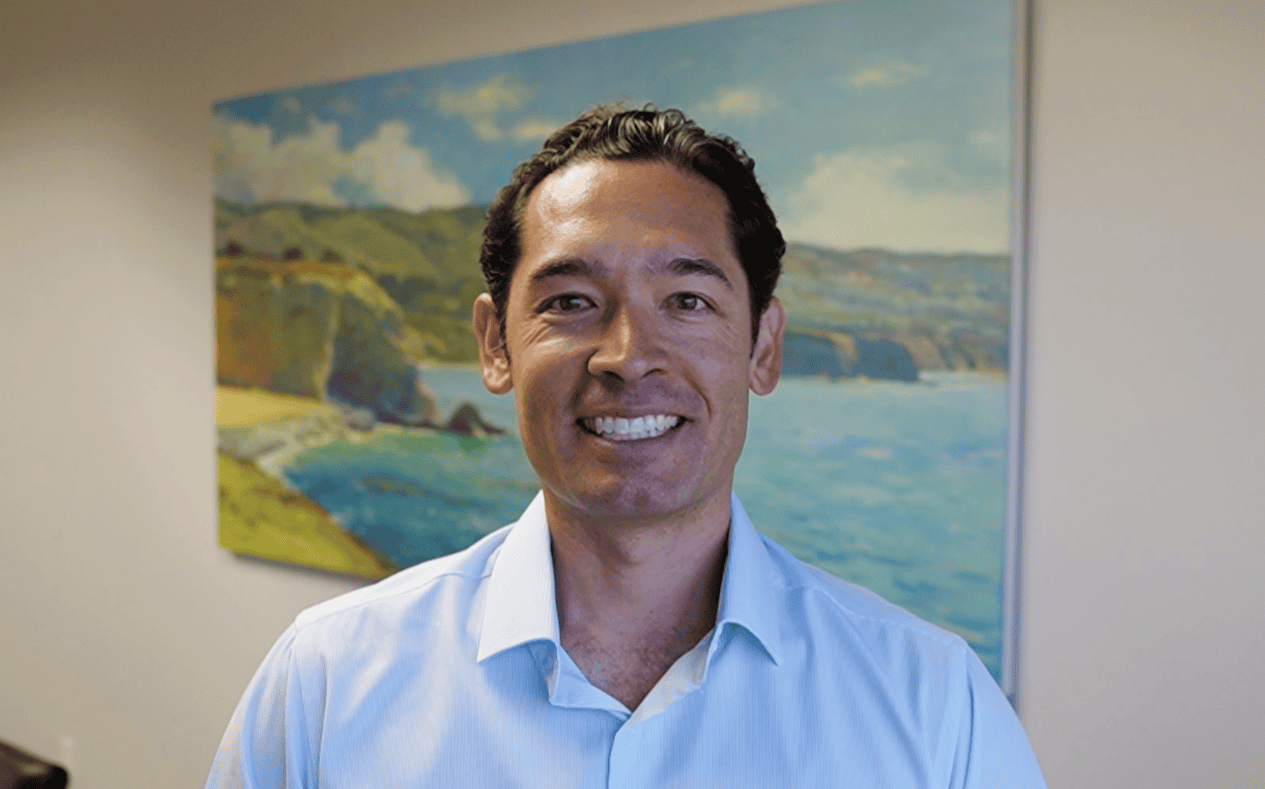
Paul Miloe

CRPS®

Paul Miloe has been a financial advisor with Albitz/Miloe & Associates, Inc. since 1996. He graduated from University of California, Santa Barbara in 1994 with a Bachelor of Science degree in Engineering Geology and Hydrology. Paul is a Chartered Retirement Plans Specialist™. His focus centers on personal and retirement planning, life insurance, portfolio management, and senior issues, including long-term care insurance. In addition to his roles as Senior Co-Vice President and CCO of our Firm, Paul is also a Branch Manager for Cetera Advisor Networks, LLC (member FINRA/SIPC). Paul, and his wife, Mary, are lifelong residents of the South Bay, have two adult children, and are active community members. Paul enjoys surfing, fishing, mountain biking, and snowboarding.

Insights

Enjoy access to our continuously updated library of insights and educational resources.

Trapezemike grandparents 3018410

Understanding IRMAA: What It Is, What It Costs, and How to Appeal It with Form SSA-44

A comprehensive guide for Medicare beneficiaries and pre-retirees navigating the Income-Related Monthly Adjustment Amount What Is IRMAA? If you’re enrolled in Medicare and your income exceeds certain thresholds, you’re paying more for your coverage than most beneficiaries — possibly a lot more. The additional charge is called IRMAA, which stands for Income-Related

Tungart7 ai generated 8715598

Parental Down Payment Assistance: The Business of Structuring Gifts vs. Family Loans

Current data indicates a bifurcated reality for first-time home buyers: while many secure properties independently, high upfront capital requirements necessitate parental financial intervention for a large segment of the market. For parents with the means, providing down payment assistance is a significant way to facilitate this milestone. However, the mechanism of that

AM Spring 2026 NL Rev H 04 10 2026 1 page